As Halloween approaches, the last thing you want is to accidentally buy a haunted house! We’ve all heard the ghost stories: creepy whispers at midnight, flickering lights, cold drafts that seem to follow you. If you’re not in the mood for a visit from Casper, here are our top tips to avoid moving into a haunted property.
Each tip comes with the real version underneath it: what a California seller must tell you, the three rules that changed on January 1, 2026, and what a home inspection finds that no ghost story ever will.
1. Check the history
Before signing the dotted line, do some research! If the house has a long history of owners leaving after only a few months, or if it has been on the market too long, you might have a spooky situation on your hands. Ask the neighbors about strange happenings. Haunted houses usually have more stories than just creaky floors!
The real version: California does not make sellers volunteer the ghost. Civil Code 1710.2 says a death on the property does not have to be disclosed once it happened more than three years before your offer. A death within the last three years is different: it belongs in the disclosures.
But the law has a catch sellers forget. It gives no protection for a lie in response to a direct question. So ask, in writing: has anyone died on this property, and when? A seller who answers falsely has stepped outside the law’s shelter.
The paperwork that tells the rest of the story is the TDS (the seller’s disclosure statement), where the seller lists known problems, repairs, and neighborhood nuisances, and the NHD (Natural Hazard Disclosure), which says whether the home sits in a flood, fire, or earthquake zone. Read both before your inspection deadline runs out, not after.
2. Unexplained cold spots
Is the air conditioning working overtime in one room while the rest of the house feels warm? This could be more than just a draft! Paranormal experts say sudden cold spots mean ghosts are lingering. If your dream home feels like Antarctica without warning, maybe rethink that offer.
The real version: a cold room has a boring explanation almost every time, and the inspection report names it. Missing insulation over that room. A duct that came loose under the house. A window that was never sealed.
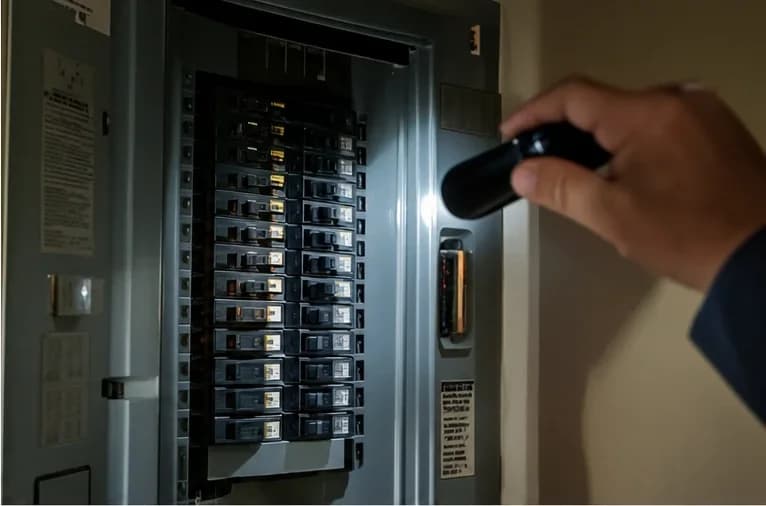
The flickering lights are the one item the state now flags for you. For sales on or after January 1, 2026, Civil Code 1102.6i requires the seller or the seller’s agent to give you a written notice recommending a professional electrical inspection: the main panel, the subpanels, and the wiring.
The law’s own reason: old or recalled wiring “may cause a fire risk and may make it difficult to obtain property insurance.” A small panel can also block solar, electric heating, or an EV (electric vehicle) charger later.
Take the notice literally. An electrician’s panel check costs far less than finding a recalled panel after you own the house. And in Contra Costa, an insurer’s questions about the panel can decide whether you get a policy at all.
3. Look for unusual marks or symbols
If you walk into a basement and see strange symbols carved into the walls, turn around and leave! It could just be an artistic past owner, but why take chances? Stick to homes where the only things carved into the walls are happy memories!
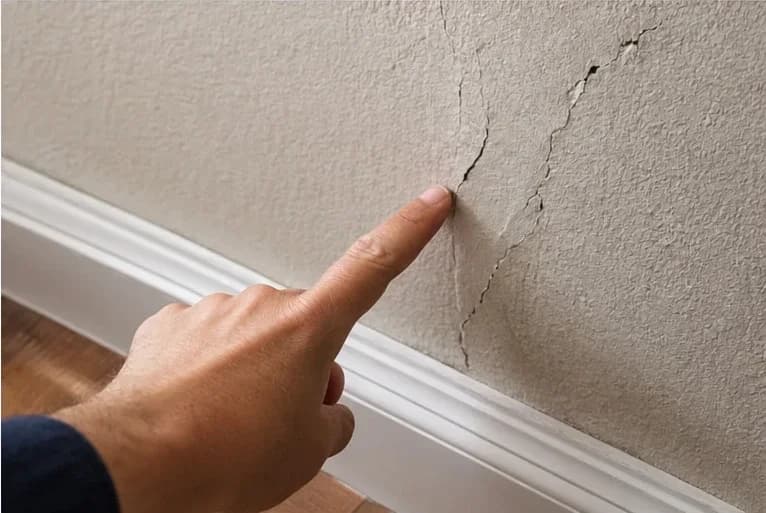
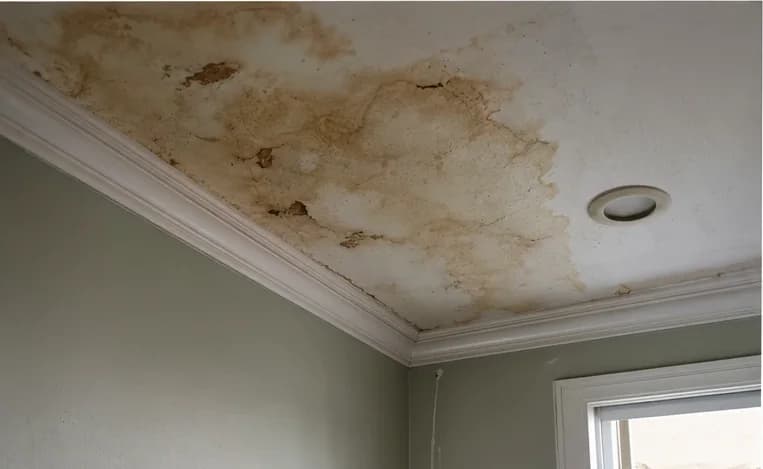
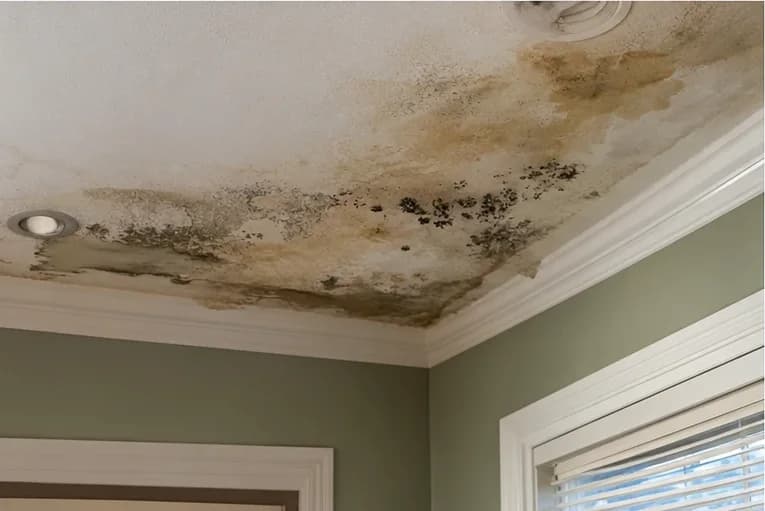
The real version: the marks that matter are stains, not symbols. A tide line on a garage wall is past flooding. A diagonal crack above a doorway is the foundation moving. A yellow ring on the ceiling is a roof or plumbing leak someone painted over.
The pest report (a termite and dry-rot inspection, standard in East Contra Costa sales) covers the wood. The general inspection covers the rest. Neither is required by law. Both are worth it.
One mark you cannot see got its own law this year. AB 455 (Assembly Bill 455), signed October 3, 2025, adds Civil Code 1102.6k: a seller who knows about tobacco or nicotine smoke residue, or about occupants who smoked or vaped on the property, must tell the buyer in writing. The law counts electronic cigarettes and vapes too.
The same 2026 package requires sellers to tell you, in writing, about any rule they know of that limits replacing the home’s gas appliances when you eventually swap the furnace or water heater (Civil Code 1102.6j).
4. Test for paranormal activity
Okay, maybe don’t bring a Ouija board to the open house. But pay attention to your gut. Pets are great at detecting ghosts! If your dog suddenly refuses to enter a room, that’s a red flag!
The real version: your gut works better with three visits than with one. See the house on a weekday morning, a weekend afternoon, and after dark. Street traffic, the neighbor’s dog, the train line through Pittsburg, and the smell of the kitchen all change by the hour. A single staged showing hides all of it.
A drive-by before you ever book a tour is the cheapest paranormal test there is. Then let the inspector run the one you cannot: water pressure, drainage, the attic, the crawl space, every outlet, every window.
5. Beware of overly quiet houses
A quiet house can be a dream. An overly silent one can feel unnerving. No birds, no animals, not even the usual creaks? Something ghostly may be afoot.
The real version: an overly quiet house is usually an empty one, and empty has its own problems. Drains under unused sinks dry out and let sewer smell in. Water heaters sit cold. Pests move in where nobody is listening.
Ask how long the home has been empty and whether the utilities stayed on. The TDS (the seller’s disclosure statement) asks the seller about this, and the inspection confirms it. New construction is the quietest house of all, and it still needs an inspection, for the reasons in buying new construction? You still need an inspection.
6. Hire a real estate agent who knows the market
At Croskey Real Estate, we can help you avoid haunted houses (unless you’re looking for one!). We know how to spot red flags, whether it’s a creaky old Victorian or a brand-new home with an eerie feel.
The real version: the agent’s job in this story is the paperwork and the clock. Your buyer’s agent makes sure every document arrives before your deadlines, then reads it all with you: the TDS, the NHD, the electrical notice, the smoke and gas-appliance disclosures, the pest report, and the inspection report.
An appraisal does none of that, which is why we keep saying an appraisal is not an inspection. What buyer representation costs at Croskey is public, on the buyer representation pricing page.
What a California seller must hand you, at a glance
| Document | What it tells you | Rule |
|---|---|---|
| Seller’s disclosure statement (TDS) | Known defects, repairs, additions, nuisances, systems that do not work, and deaths within the last three years | Civil Code 1102 and following; Civil Code 1710.2 for deaths |
| Natural Hazard Disclosure (NHD) | Flood, wildfire, earthquake fault, and other mapped hazard zones | Civil Code 1103 |
| Electrical inspection notice | A written recommendation to have the panel, subpanels, and wiring inspected | Civil Code 1102.6i, sales on or after January 1, 2026; homes under three years old exempt |
| Gas appliance restriction disclosure | Any known state or local rule limiting replacement of the gas appliances that come with the home | Civil Code 1102.6j, sales on or after January 1, 2026 |
| Smoke residue disclosure | Known tobacco, nicotine, or vape residue, or a history of occupants smoking on the property | Civil Code 1102.6k, added by AB 455 (Assembly Bill 455), Chapter 263 of 2025 |
| Home inspection and pest report | What the house is actually hiding | Not required by statute; standard practice, ordered by you |
Our read, from the operator’s chair
Two of our own closed Pittsburg listings tell the honest-disclosure story from the seller’s side. One went to market in 2022 with its new 40-year roof dated to the month, right in the listing. Another, in 2023, was advertised plainly as a fixer-upper and priced for it. Both sold. When a seller puts the facts in writing up front, the inspection brings fewer surprises and fewer last-minute price fights. As a buyer, use that: read what the listing already admits, then let the inspection confirm it.
Every October a buyer asks us the same thing at a showing: did anyone die here? Fair question, and the law gives you a clear way to ask it. But the answer that decides whether a house is a good buy sits somewhere less dramatic: page two of the TDS, and whether the inspection report says the same thing the seller did.
The problems that cost real money are ordinary. A painted-over ceiling stain. An older electrical panel an insurer will not cover. A crawl space nobody opened. The 2026 rules did not replace that homework. They gave it the state’s backing.
Happy house hunting and happy Halloween
Don’t let your dream home turn into a nightmare on Elm Street. Read the disclosures, order the inspection, and ask the death question in writing. If you want someone on your side of the table for all of it, book a buyer consultation and we will walk you through a Pittsburg or Antioch purchase from offer to keys. Real estate line: (925) 219-8488.
Happy house hunting and Happy Halloween!
This article is general information about California disclosure law as published on leginfo.legislature.ca.gov and read on October 13, 2026. It is not legal advice. Laws change; confirm the current text, and ask a real estate attorney about your own purchase.
Frequently asked questions
Does a seller in California have to tell me if someone died in the house?
Only if the death happened within three years before your offer. For older deaths, Civil Code 1710.2 says the seller does not have to bring it up. But if you ask directly, the seller and the agent may not lie. The law removes their protection for a false answer to a direct question.
What changed for home sellers in California on January 1, 2026?
Three disclosures joined the standard package: a written notice recommending an electrical inspection (Civil Code 1102.6i), a written note about any known rule limiting replacement of the home’s gas appliances (Civil Code 1102.6j), and a written disclosure of known tobacco or vape smoke residue, or of occupants who smoked on the property (Civil Code 1102.6k, from AB 455 (Assembly Bill 455)).
Is a home inspection required to buy a house in California?
No law requires one. The seller’s disclosures cover what the seller knows. The inspection, the pest report, and an electrician’s panel check are the buyer’s tools, and they are the only way to learn what the seller does not know or did not write down.
Can I back out if the inspection finds a problem?
Usually yes, during the inspection contingency period: you can cancel or renegotiate based on what the inspection finds, within the deadlines in your purchase agreement. The exact rights depend on the contract you signed, so read the contingency dates with your agent before the clock starts.